2000
Automai began as a testing company.

WHO WE ARE
Automai grew from a practical challenge: enterprise workflows span many applications and access paths, but teams still need to know whether the work gets done.
Since 2000, Automai has focused on front-end workflow automation that helps organizations test, validate, and monitor the processes people depend on.
Automai’s approach was shaped by hands-on testing work, where a successful server check or single application test did not always show whether a complete user journey worked.
Automai began as a testing company.
The company began reselling testing tools and encountered recurring gaps across real projects.
Its product story connects front-end performance testing, production monitoring, and functional validation through real user workflows.
Teams need to validate whole business processes, even when the underlying application landscape is inconsistent or difficult to instrument.
A business process can cross legacy applications, new interfaces, virtual desktops, and connected services.
Protocol-level measurements do not always explain what a user saw or whether a business transaction completed.
Some critical workflows cannot be represented accurately by API checks alone.
Late testing windows make repeatable workflow coverage and usable evidence especially important.
Automai models the actions people take through application interfaces: logging in, navigating screens, entering information, submitting transactions, and checking the result. This front-end perspective complements the infrastructure and application telemetry organizations already use.
Validate the steps and handoffs that together make a business workflow complete.
Apply reusable workflow assets to relevant performance, functional, and monitoring activities, subject to verified product behavior.
Use available timing, execution, and failure evidence to investigate a broken or degraded step.
The platform story explains how workflows, execution, reporting, and evidence connect the product offerings; those shared capabilities are not a fourth peer product.
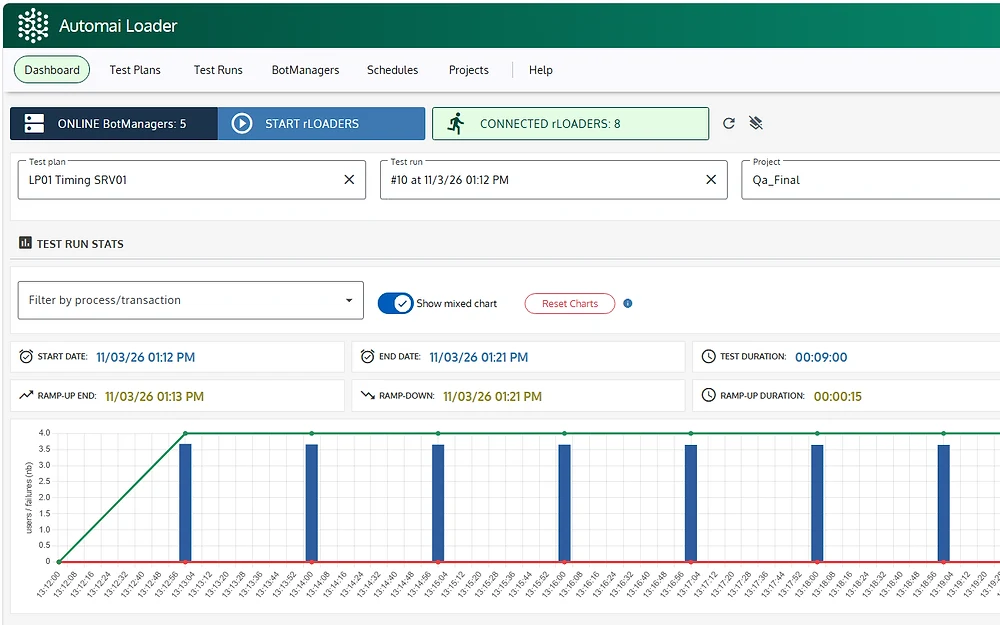
01 LOADER
Run automated user-side workflows at scale to find where work slows or fails under load.
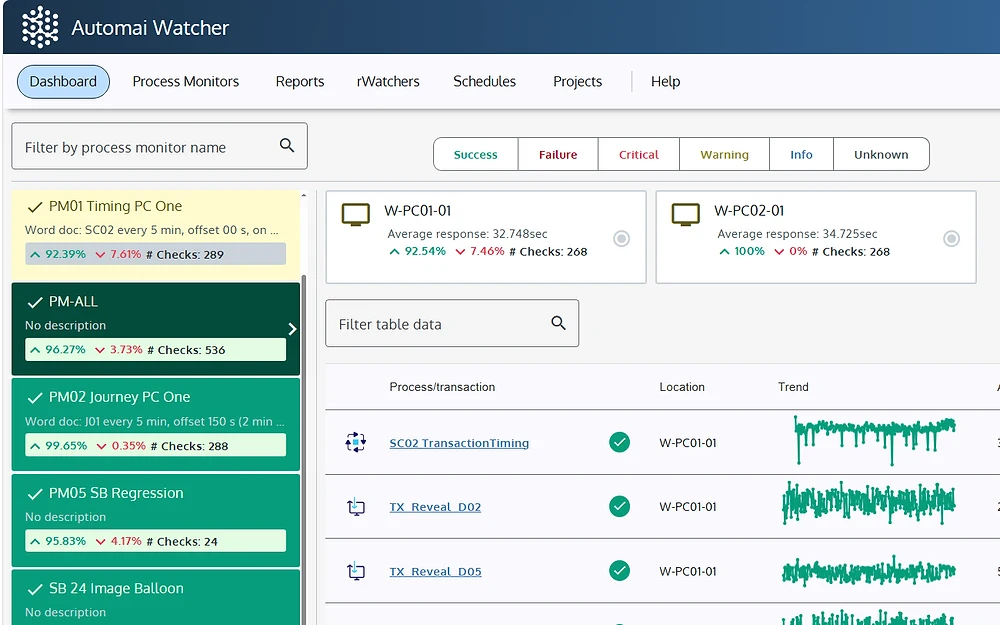
02 WATCHER
Run workflows repeatedly to identify failure or degradation from the user perspective.
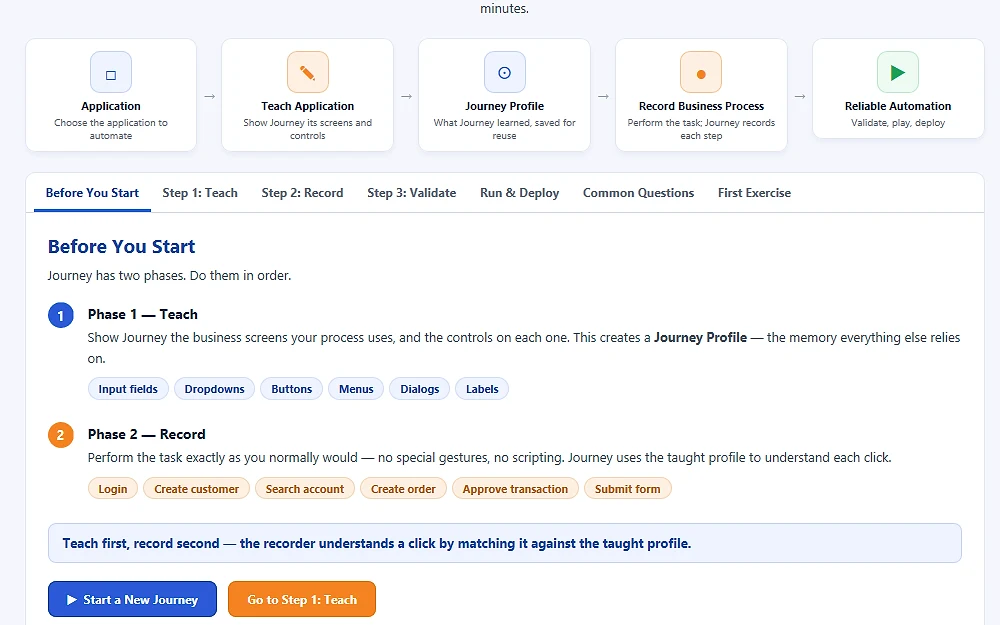
03 TESTER
Build and reuse functional checks for steps, validations, and expected workflow outcomes.
The source page states that Automai was founded in 2000, is privately held, and is headquartered in Los Angeles, California.
2000, according to the current page.
Los Angeles, California, according to the current page.
Enterprise workflow testing, monitoring, and validation across complex application environments.
Our customers have the independence to test whatever application, whenever they want, even with short time frames....with one tool.




















Automai focuses on validating the interactions users perform through application interfaces and the outcomes those workflows produce.
The front-end workflow perspective is complementary to infrastructure and application monitoring; it does not replace those operational systems.
The three primary products are Loader for front-end performance testing, Watcher for production workflow monitoring, and Tester for functional workflow validation. Shared platform capabilities support them.
Explore how performance testing, release validation, and production monitoring can build on the same business-critical path.